
Imagine a classic haunted house, like the Addams Family house. Is the architecture tall and ornate? Does it have towers reaching towards the sky? Pointed arches?
Now imagine that style of house everywhere in your neighborhood: vertical roofs, intricate and ornate trim, tall narrow windows, vibrant, multicolored facades, decorative spindles.
These are classic Victorian houses. In my opinion, they shout “look at me.”

Carson Mansion in Eureka, California. Photo by Cory Maylett
In early 1900s America, this was the default direction of architecture. Why? It reflected an era of exuberance and historical nostalgia, drawing heavily from European styles. Height was a status symbol. Ornamentation was proof of taste.
Houses climbed upward towards the sky because that’s how culture at the time defined success.
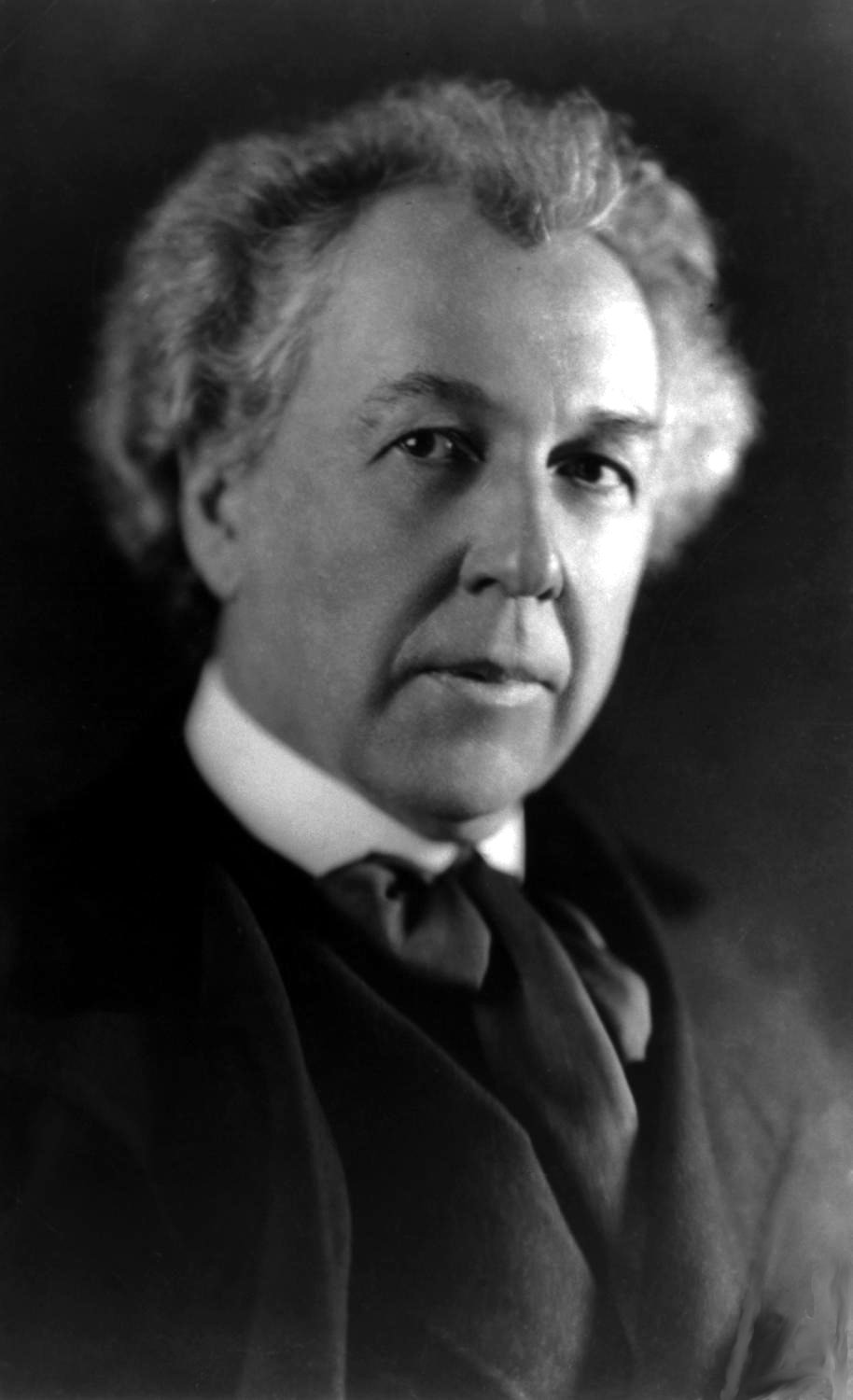
Architect Frank Lloyd Wright
The Horizontal Shift
Then came architect Frank Lloyd Wright.
He did something radical. He shifted the norm. Instead of his houses going vertically, they went horizontally. Instead of his architecture competing with nature, it began to echo it.
In the American Midwest, the horizon is such a dominant line. It is long, uninterrupted, and calm. Wright translated that horizon line into his buildings.
His houses didn’t soar upward from the land; they stretch across it. His buildings feel like part of the prairie itself.
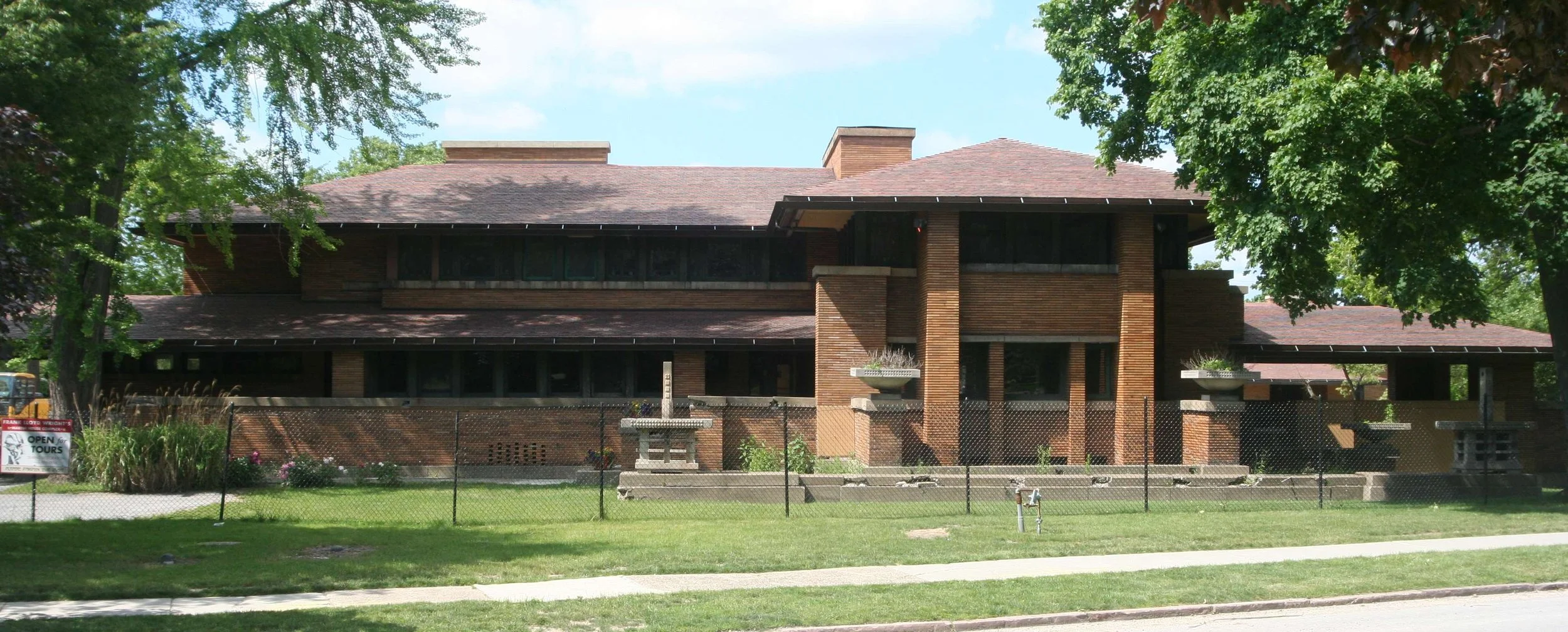
Frank Lloyd Wright’s Darwin Martin House, built between 1903 and 1905. The house is considered to be one of the most important projects from Wright's Prairie School era.
An Instrument of Innovation
One of the simplest tools he used wasn’t glamorous at all, but a simple construction tool: the brick. This ordinary tool became his instrument of innovation.
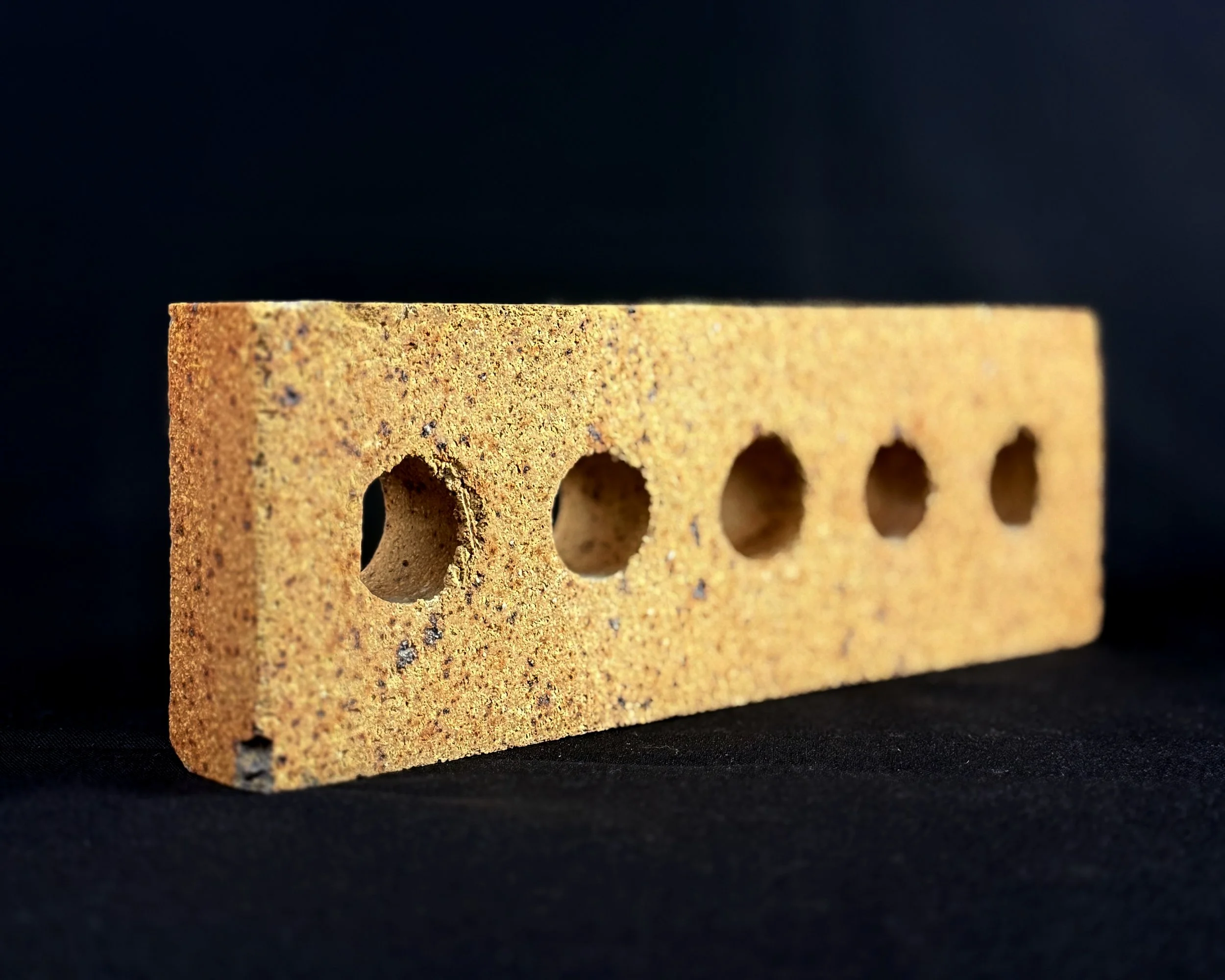
A Frank Lloyd Wright brick from the Darwin Martin House. Photo by Think Variant.
He didn’t use the typical compact American brick that emphasizes stacking and vertical rhythm. He returned to a longer, flatter form, often called Roman brick, and frequently had them custom-made by regional brickyards to his specification.
While standard bricks were relatively short and tall, Wright’s bricks could be twelve, sixteen, even eighteen inches long while remaining shallow in height. The proportions and geometry shifted and with them, the way his buildings were perceived.

A Frank Lloyd Wright brick from Darwin Martin House. Photo by Think Variant.
Wright also chose specific materials for the bricks to support his mission of architecture echoing the land. He selected clay bodies and firing techniques that produced warm, earthy tones:reds, browns, and ochres, colors geologically tied to the building site. The texture remained matte, natural, and tactile.
The original bricks were fired in coal-fired beehive kilns; the fluctuating temperatures within these kilns produced a variety of golden and reddish-tan tones. They often featured iron spotting.
When building with these bricks, Wright minimized the vertical joints so they nearly disappeared. This created continuous horizontal bands across the wall. The result? Your eye didn’t climb upward. it moved outward, across the horizon. A wall of these bricks seemed to echo the ground beneath it.
As Wright continued designing American homes, he pushed this idea even further. At his home and studio, Taliesin West, brick and stone were integrated so seamlessly with the landscape that the building feels like it was quarried from the hillside itself.
Wright was designing a horizon. He redefined traditional concepts of structure and space by connecting the built environment to the natural world.
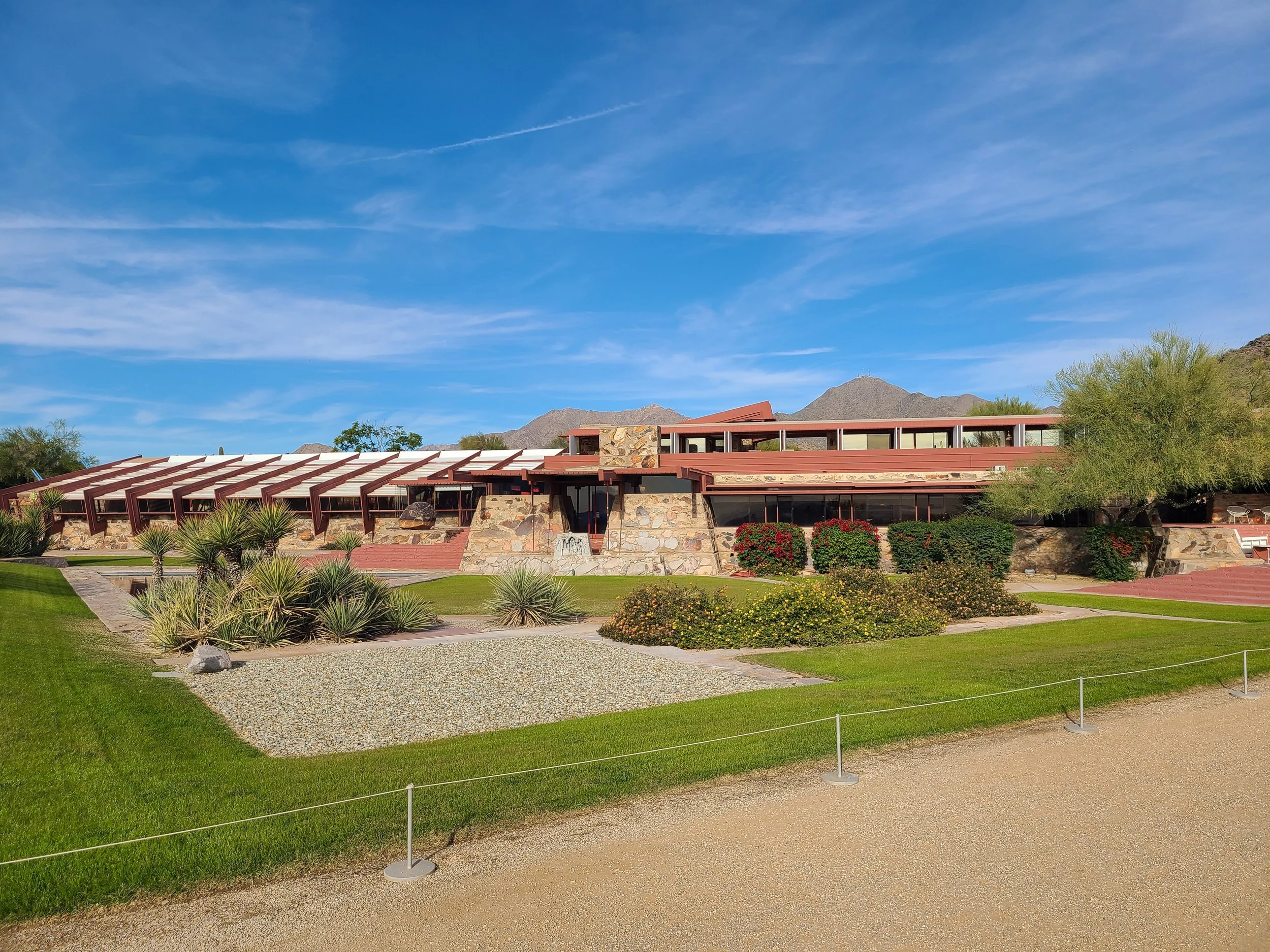
Frank Lloyd Wright’s Taliesin West, in Scottsdale, Arizona was built in 1937.
Thinking Outside the Box
Frank Lloyd Wright was shaping experience. Where most architects of his time thought in boxes and separation, he thought in connection.
He was deeply interested in human psychology: how space feels, how it flows, and how it moves with you. Wright understood that architecture shapes behavior.
Where many architects designed buildings as collections of rooms, Wright designed sequences of experience. Spaces unfolded gradually. Ceilings compressed and then opened. Windows framed the horizon.
His homes guided people through light, landscape, and movement, reminding them that architecture isn’t just something we live in. It’s something we feel.
Innovation for Humans
Frank Lloyd Wright saw a vast horizon where others saw walls and barriers. And that simple shift, in reimagining something ordinary, like a brick, changed how we think about space, perception, and human experience.
At Think Variant, we believe human innovation sometimes doesn’t need to be flashy or techy. We believe innovation is deeply human. It can be a change in direction when everyone else goes the other way. It can be a reconfiguration for the human experience. It can be something as ordinary as a brick.
Look for innovation everywhere, especially where everyone else sees only the ordinary.
