
Why Dots And Dashes?
The telegraph key sits on museum shelves now. Beautiful in its simplicity. But the system behind it: the code, the training, the infrastructure, had to be rebuilt from the ground up before it got there. Not because the invention failed. Because someone finally solved for the human.
Samuel Morse gets the credit. His name is on the code, in the history books, and in the story most of us learned. But the version of Morse Code that actually worked: fast enough for human hands, simple enough for human ears, was built by someone who assumed nothing.
His name was Alfred Vail. And he started in a print shop.
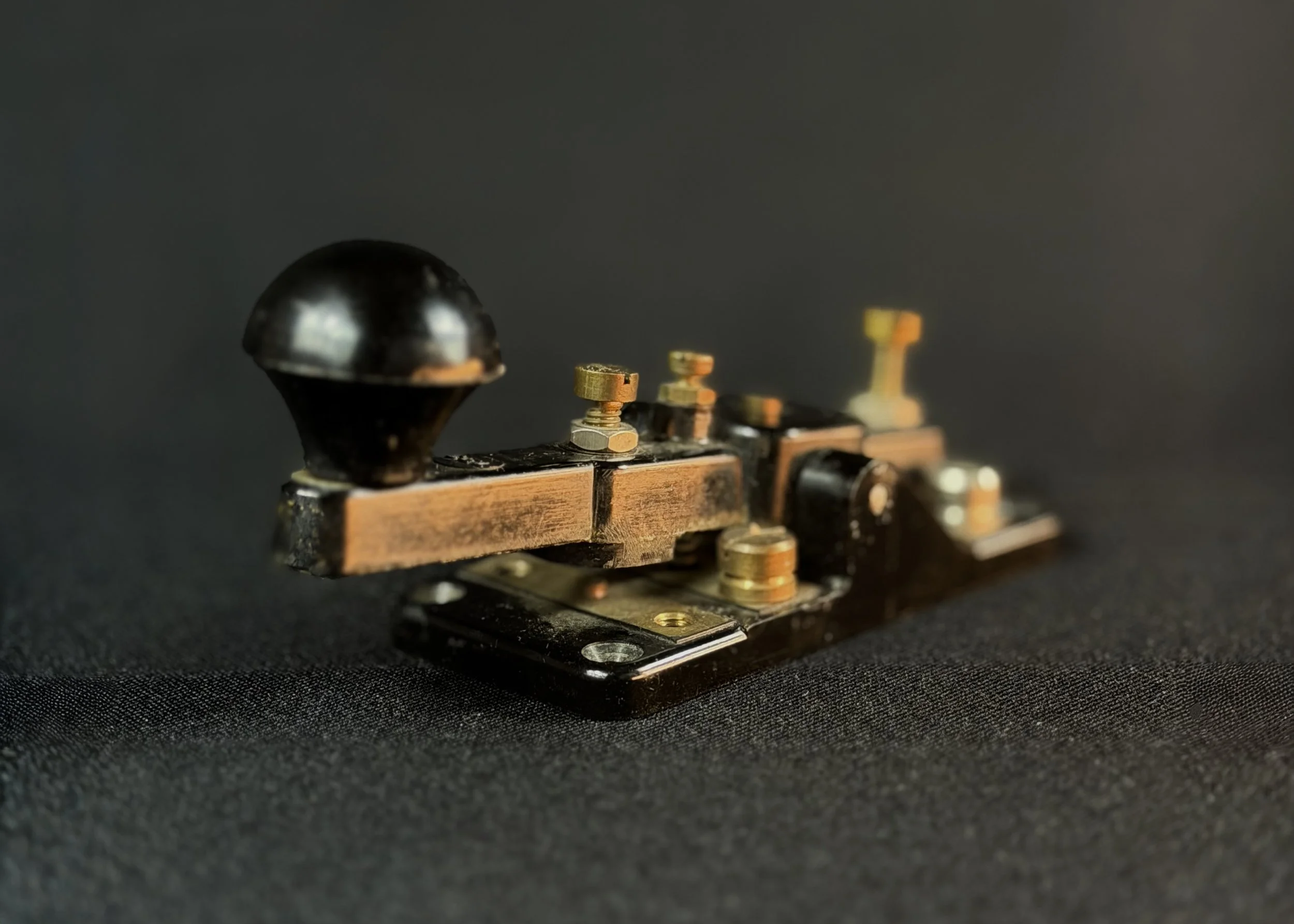
Telegraph Key, photograph by Think Variant.
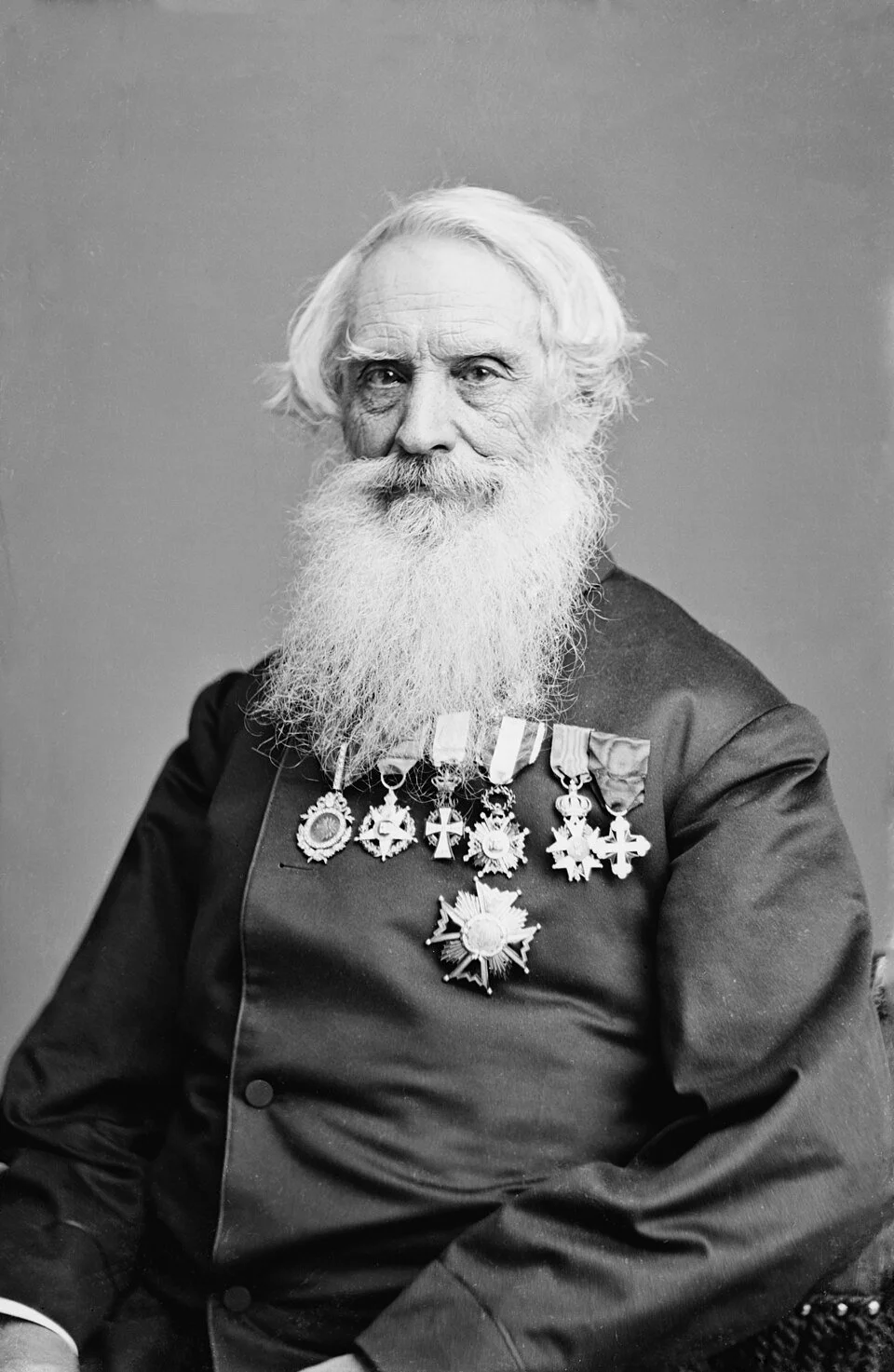
Samuel Morse. Photo by Wikipedia
The Concept That Worked on Paper
Morse had already done something remarkable. In the 1830s, he developed the telegraph: a device that could send messages across hundreds of miles using electrical signals. The concept worked. What didn't work, not practically, was how the messages were encoded.
Morse's original system assigned numbers to words or phrases, not letters. To send "good morning," an operator looked it up in a codebook, found its number, say, 215, and transmitted that as a signal. The person on the other end received 215 and looked it up in reverse. Every word or phrase required a lookup. Every lookup required a codebook. Every codebook required two people who both had one.
It worked. But on paper.
Morse was a visionary, not an operator. He had never sat at the telegraph himself, hour after hour, trying to move messages at high speed. He had solved the transmission problem.
But he didn’t ask the harder question: can a human being actually use this?
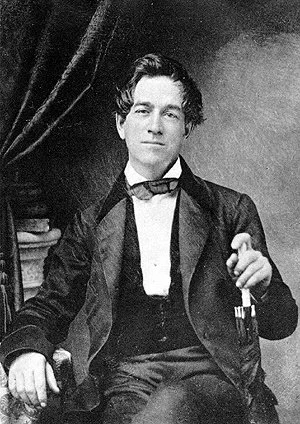
Alfred Vail. Photo by Wikipedia
Morristown, 1837
Alfred Vail was a machinist who attended a demonstration of Morse's telegraph and saw two things at once: the potential, and the problems.
He did something nobody expected. He walked into a local newspaper's print shop and started counting.
Not reading. Counting.
Every letter block in every type case. How many E's? How many T's? How many Q's, Z's, J's? This was a hands-on, physical audit of how the English language actually behaves. The letters used most often lived in the largest cases. The rarest ones sat in the smallest. The frequency of the entire English language was sitting there, physical and countable, in wooden drawers.
Vail didn't assume he knew the answer to Morse’ problem. He went looking for it.
The Real Constraint

International Morse Code. Photo: Wikipedia
What he found changed everything. He rebuilt the code around it. The most common letters got the shortest signals. E became a single dot: the fastest possible transmission. T became a single dash. Rare letters got longer, more complex sequences. The system was optimized not for the wire, but for the person operating it: for the wrist. The finger. The ear.
And then something nobody planned happened.
Operators discovered they could hear the code. They stopped reading marks off paper tape and started listening to the rhythm of the clicks. The system evolved again, naturally, around what humans could actually do because someone had asked the right question early enough for the answer to matter.
The code carried Morse's name. The question that made it work was Vail's.
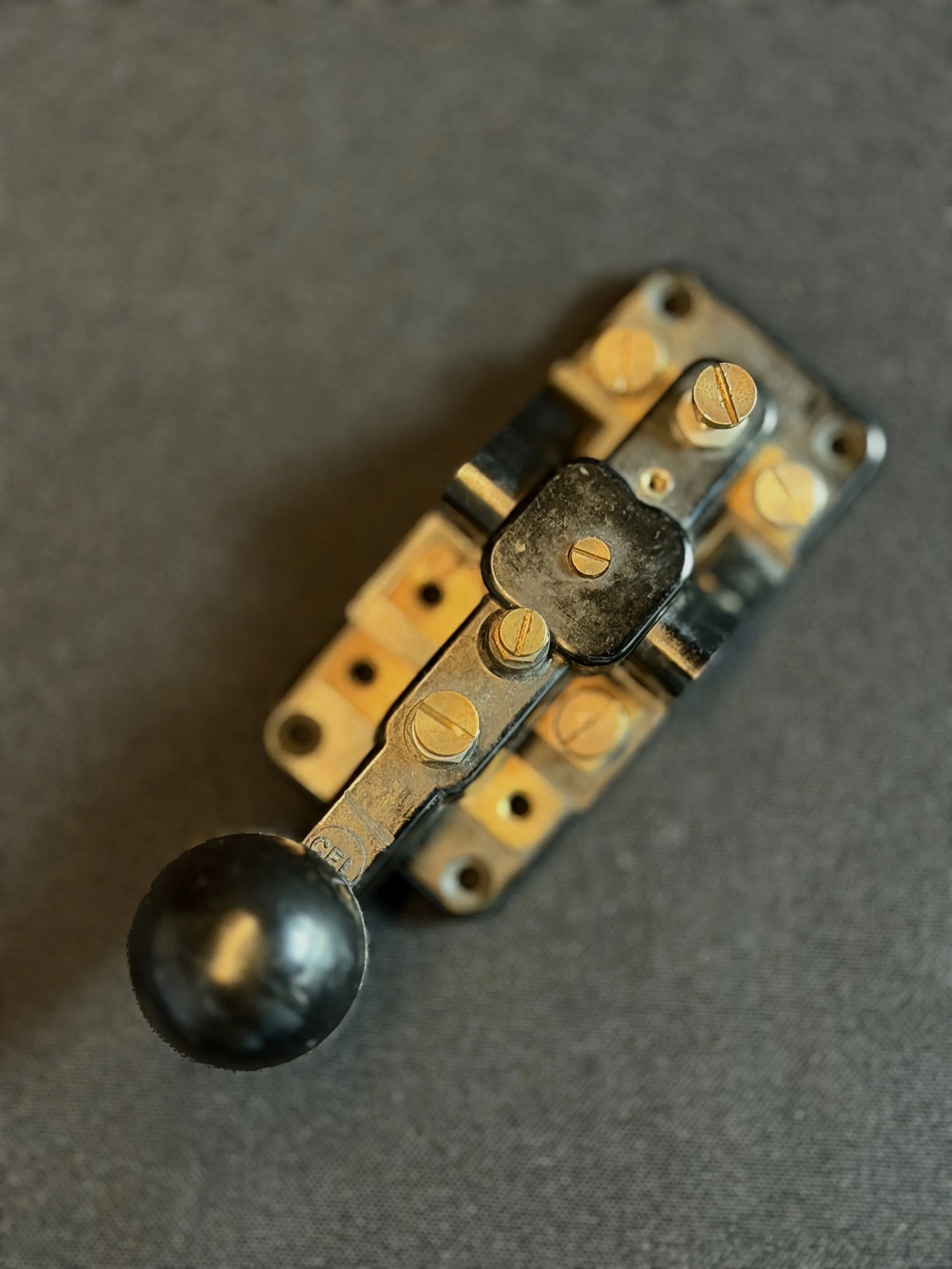
Telegraph Key. Photo by Think Variant
Two Different Questions
Samuel Morse asked: can electricity carry information over distance?
Alfred Vail asked: can a human being actually use this?
The second question is the one that changed how we communicate.
Think Variant
When a significant client came to us with a serious project, we didn't open a CAD file. We grabbed cardboard.
We cut it up, built a rough mockup, and showed up to the meeting with it in hand and a thousand questions. No assumptions. No polished proposal. Just an honest attempt to find the real problem before anyone spent serious money. Cardboard is cheap. It forces the real conversation. It keeps everyone focused on the problem instead of a solution someone already fell in love with.
We call it de-risking. Vail would have recognized it immediately.
We don't assume we know the problem. We go find it.
