
Rethinking the Cut
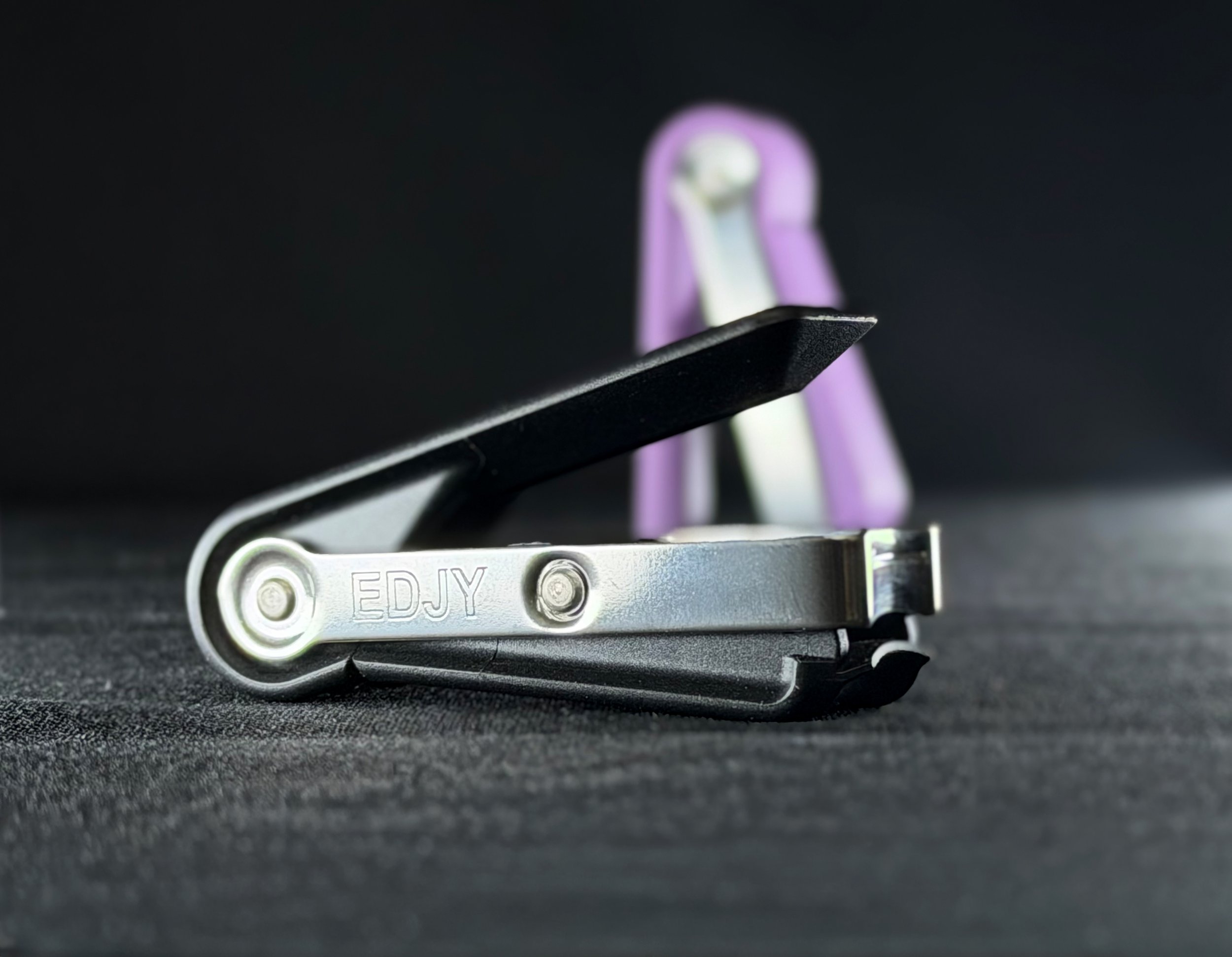
EDJY nail clippers. Photo by Think Variant
Rethinking the Cut
How do you revolutionize something that’s been around since the late 1800s?
Start by not assuming the problem has been solved.
Have you had this tiny, annoying experience? You reach for a nail clipper, and try to find a quiet place. And then…clip. CLIP. CLIP! The sharp noise. The little clippings ricochet across the room. Even when you aim over the trash, somehow most of the clippings don’t make it.
And yet, we’ve accepted this annoying experience. Because “that’s just how nail clippers are.”
First Principles Design
EDJY didn’t accept that.
They bought every nail clipper they could find and treated a mundane tool like a serious design problem. They probed. They compared. What does this one do well? Where does it fail? What annoyances have we as a society quietly normalized? EDJY put nail clippers under a microscope to study what happens at the moment of the cut, paying attention to details most of us ignore because we’ve stopped noticing them.
What they found was simple: the standard clipper mechanism is built around two opposing jaws, squeezing until the nail fractures. It works, sure, but it’s noisy, it can leave rough edges, and it throws debris.
So they rethought the entire system instead of tweaking or iterating what has been done.
EDJY’s clipper uses a single cutting blade, designed to slice cleanly through the nail rather than crush and fracture it. The result is a smoother cut, a quieter experience, and a small compartment that captures clippings so they don’t end up on the sink, the floor, or in your sock.
No harsh noise. No flying nail clippings. A clean cut without the mess.
But EDJY didn’t stop at performance.
Their Philosophy
Look around the marketplace and you’ll see plenty of modern products optimized for replacement: cheap materials, short lifespans, and a business model built on repeat purchases. EDJY took the opposite stance: make a tool you keep. Not for a year, but for a lifetime. Not disposable, but durable.
That philosophy extends beyond the tool itself. They prioritized environmentally friendlier materials, reduced waste through simpler recyclable packaging, and kept manufacturing local, working with suppliers within roughly a 250 mile radius to support nearby economies and shorten the supply chain.
Rebuild the System, That’s Human Innovation
That’s human innovation: seeing the default, questioning it, and rebuilding the system.
At Think Variant, that’s our mission: accelerate the rate of human innovation. Not accepting things as they are just because that’s how they’ve always been done. Not tweaking the old system. But rethinking it. Rebuilding it.
