
Breathing Devices, Hair Care Products, Traffic Signals — One Inventor
Cleveland, 1916. In the middle of the night in the middle of summer, Garrett Morgan was woken up by someone pounding at his door.
There was a deadly explosion in a tunnel and workers were trapped inside. Two rescue attempts had already been made. Both failed. Ten of the rescuers who went in never came back out, overcome by the same gas that trapped the workers. Then someone remembered a device Morgan had invented: a hood that filtered air through a chamber and let you breathe where no one else could. So they hustled to his house and woke him up.
Morgan didn’t have time to change out of his pajamas. Each second made a difference in life or death. Both Morgan and his brother rushed to the tunnel as fast as they could with several hoods. They got to the explosion site and Morgan put one of his hoods on himself and went straight into the smoke.
Minutes went by that probably seemed like hours.
Then out Morgan emerged, pulling men out alive. His brother behind him, saving others.
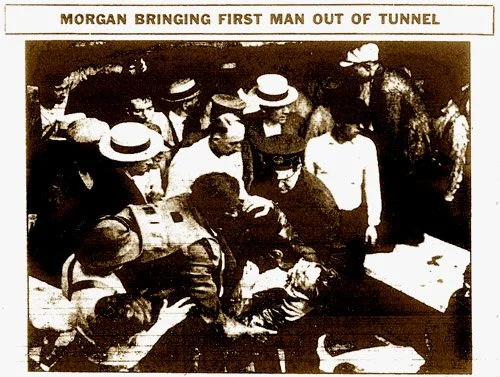
A newspaper photograph of Morgan's rescue in 1916
Morgan wasn’t a medical manufacturer. He wasn’t in the healthcare industry. He had no training in safety engineering or in emergency rescue. He was a sewing machine repairman from Cleveland. He had a sixth grade education.
One day he had watched firefighters struggling to breathe in thick smoke and couldn't stop thinking about why. So he prototyped a solution: a hood that allowed a person to breathe in filtered air. He patented it and sold his invention around the country. And he believed and trusted in what he built enough to use it on himself when the moment came.
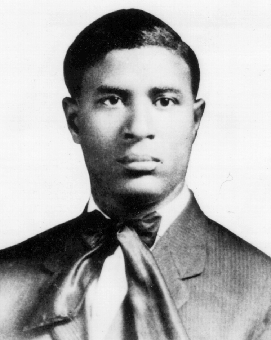
Portrait of Garett Morgan
Always Fixing, Always Experimenting
In his sewing shop, he had been trying to make a liquid solution to polish sewing machine needles, to prevent them from burning his fabric at high speed. As he was experimenting with a new solution, he accidentally dripped the solution on a piece of fur cloth... and noticed something different. The fibers had straightened.
Straightened! That piqued his curiosity. He followed it. How did that happen? Why? What if..
He experimented until he understood what the liquid was doing. Then he developed this solution into a safe product that straightened hair. The more he researched hair and hair care, the more problems he saw. Each problem opened the next question then the answers became products: A hair straightening cream. A curved tooth comb. A hair dye. A whole product line, born from an accident and an observation in a sewing machine shop.
He wasn't trying to solve a hair care problem. He just noticed something unexpected and couldn't leave it alone.
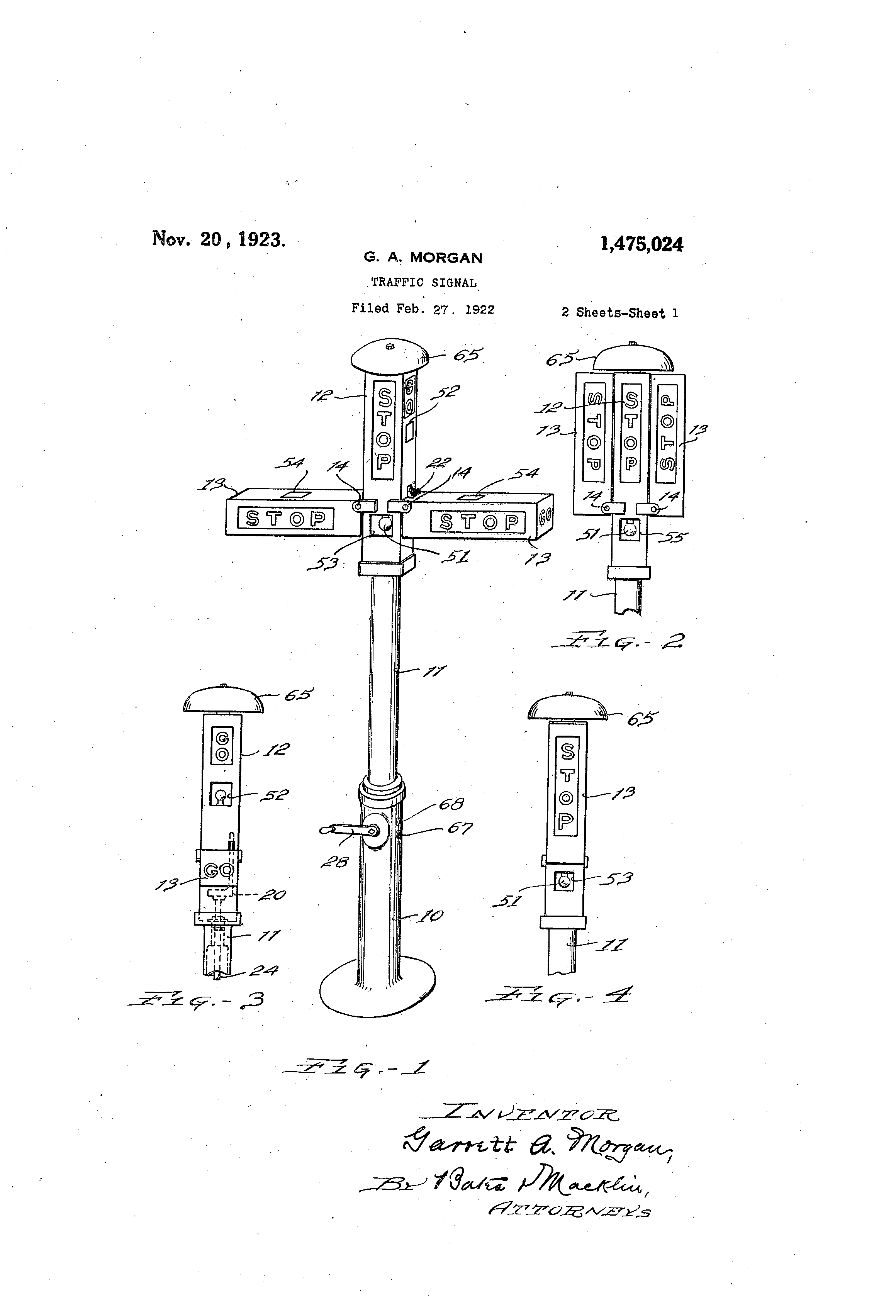
Garett Morgan’s traffic signal patent
The Collision
A few years later, he was driving through the streets of Cleveland in his automobile.
At that time bicycles, horse drawn carts, motor vehicles, and pedestrians all shared the same streets with no real system for who had the right to move. Crashes happened constantly. One day, Morgan watched a collision between an automobile and a horse drawn carriage at an intersection.
Most people drove past. Morgan couldn't. He couldn’t walk past a problem without trying to solve it.
He went home and designed a solution: a moment where everyone stopped before anyone could move. Every direction halted simultaneously, giving the intersection time to clear before the next direction proceeded, like a four way stop sign.
He patented it in 1923 and sold the rights to General Electric. He wasn't a traffic engineer. He was a man who drove through an intersection, watched people struggling, and saw something nobody was fixing.
Eyes Wide Open
Sewing machines. Hair care. Safety equipment. Traffic signals. Different industries. Different problems. Different audiences. No diplomas. No credentials. No permission.
He moved through the world with his eyes open. When he saw something broken, he fixed it. When he saw a problem everyone else was living with, he solved it.
He just kept going. Kept experimenting. Kept creating. Kept solving.
Fix it. Create it.
What are you walking past right now? It doesn't have to be in your industry. It can be the problem that's been bothering you. It can be a problem everyone is living with. The one you keep noticing.
Keep your eyes open. And fix it.
We're Think Variant. We spend our days on problems other people walked past: in manufacturing, engineering, and materials. If the hardware, process, or playbook to make your part doesn't exist, we create it.
