
How Syracuse Became a Hub for Innovation
Incubator. Sandbox.
These are the words we use today to describe places where businesses share space, resources, and a vision for growth.
We see it everywhere in Syracuse, NY.
At Salt City Market, food entrepreneurs rent a counter, test recipes, build a following, and eventually step into their own brick-and-mortar restaurants. For many, that shared space has changed everything, helping vendors move out of the market into their own spaces.

Salt City Market, downtown Syracuse, NY
CenterState CEO’s newly expanded business incubator, the INSPYRE Innovation Hub in downtown Syracuse, offers more than 90,000 square feet of innovation space, making it New York State’s largest entrepreneurship hub.
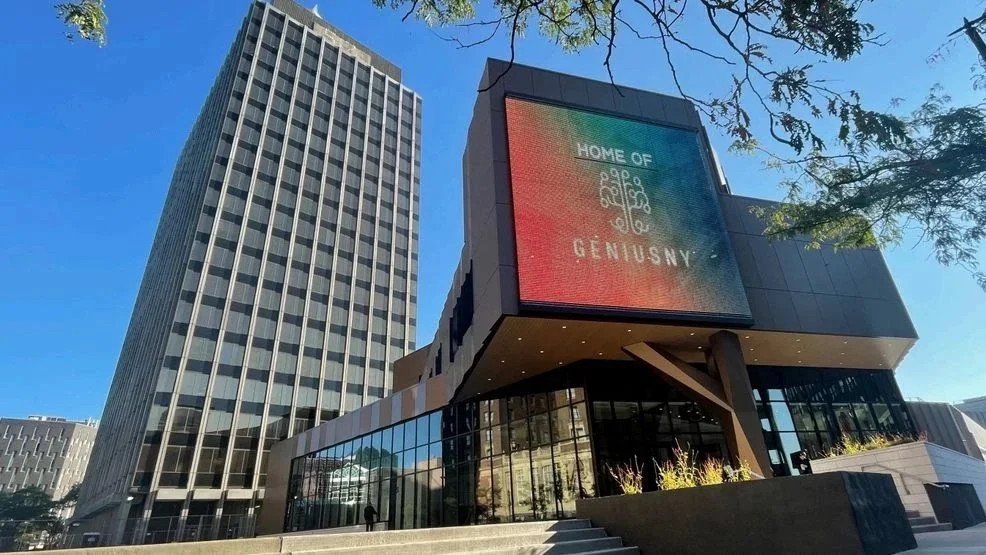
INSPYRE Hub, downtown Syracuse, NY. Photo source: Office of New York State Governor Kathy Hochul
And you can feel that same collaborative pulse on Central New York college campuses, in maker spaces, and across Shark Tank-style competitions, places where shared access leads to shared learning, which fuels shared growth.
It’s everywhere. But this model of collaboration isn’t new.
It started almost 150 years ago, right here on Geddes Street in Syracuse.
The Workshop That Started It All
In the 1880s, mechanical engineer Charles E. Lipe (1850–1895) opened the C. E. Lipe Machine Shop, a 20,000-square-foot facility on South Geddes Street. That’s about the size of four NBA basketball courts. It became known as Syracuse’s first industrial incubator, a place where innovation was shared and accelerated.
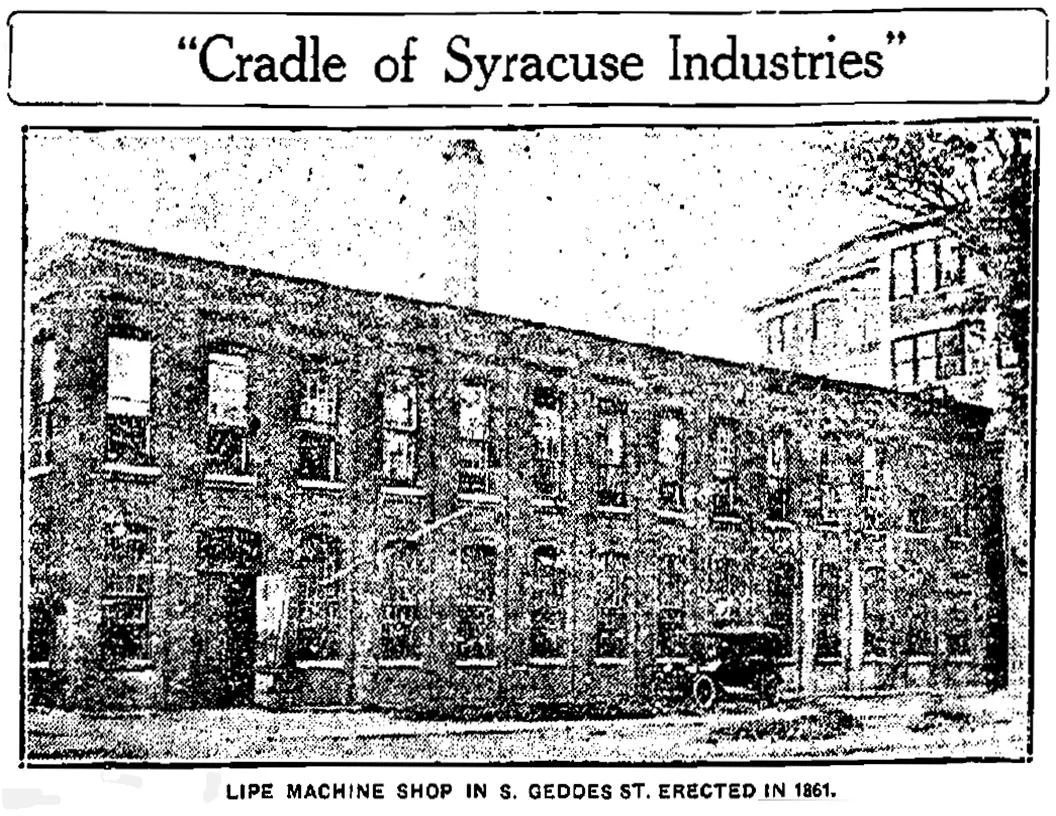
Photo source: Onondaga Historical Association
Lipe used part of the space for his own work. With fellow inventor Alexander T. Brown, he developed the Hy-Lo Bi-Gear, a two-speed mechanism that changed how bicycles shifted gears. The company that grew from that idea would go on to manufacture transmissions for the Ford Model T, making Syracuse a global center for precision manufacturing.
But Lipe’s shop was more than a single success story; it was a launchpad for many.
Lipe rented benches to engineers, tinkerers, and dreamers, stocking the floors with machines and tools they could all share. The result was a symphony of motion: gears turning, ideas colliding, prototypes failing and improving in real time.
Among those walls, Herman Casler created the Mutoscope, a motion-picture viewing device that flipped photographs rapidly to create the illusion of movement—a rival to Edison’s Kinetoscope and a spark for the film industry.
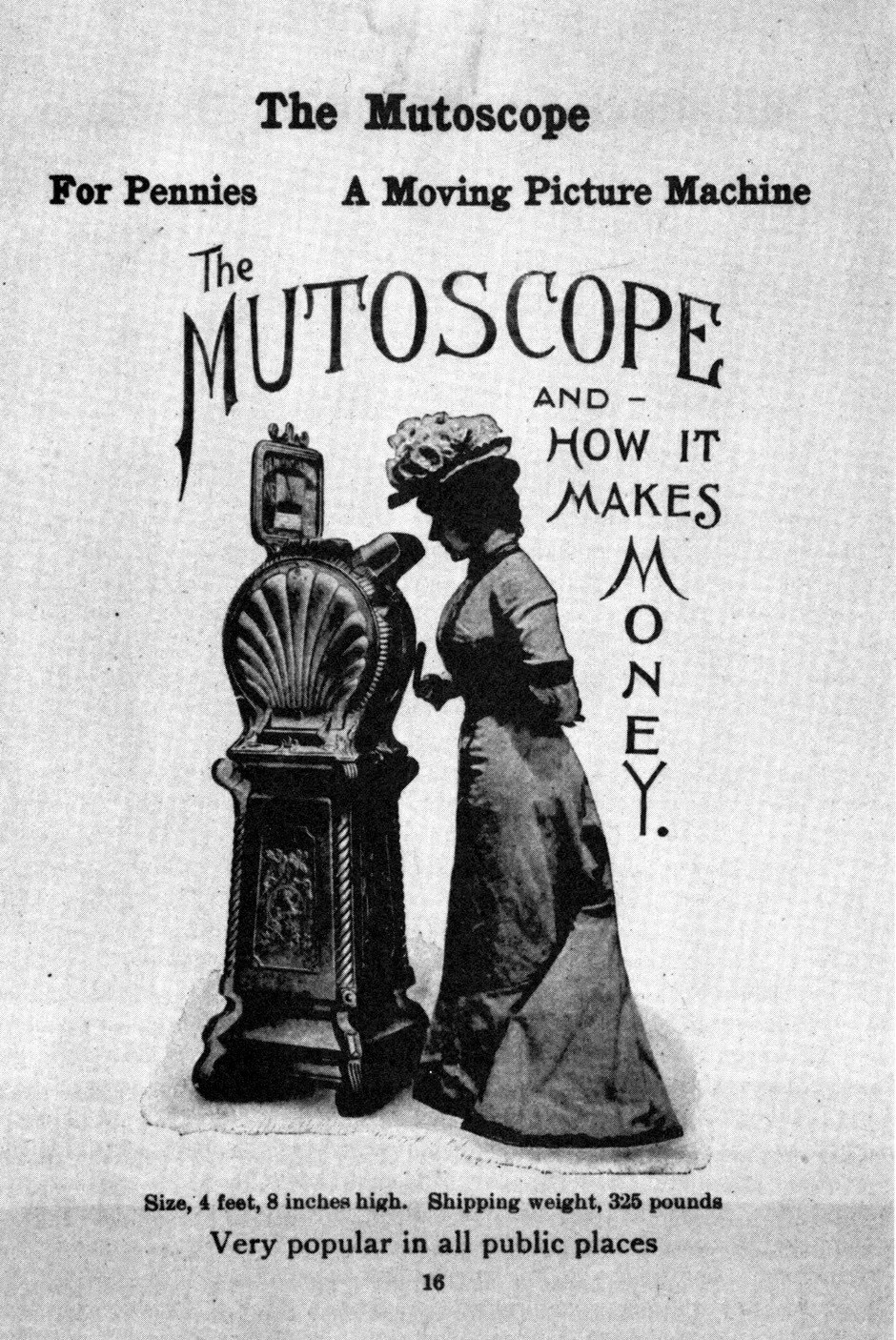
Herman Casler’s Mutoscope. Photo Source: Wikipedia
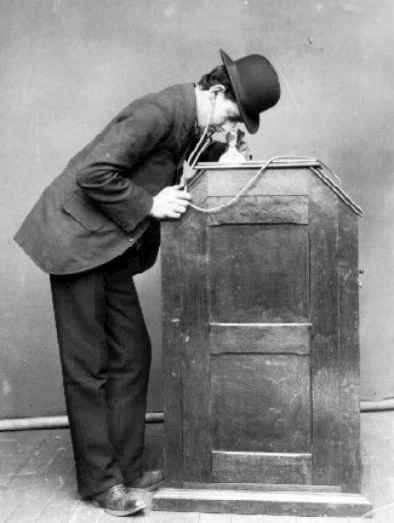
Thomas Edison’s Kinetophone. Photo Source: Wikipedia
In that same building, H. H. Franklin Manufacturing Company began designing its first luxury automobiles: air-cooled, lightweight, and decades ahead of their time.
The Franklin, often called Syracuse’s car, became a national status symbol for innovation and precision engineering. Today, one of those early Franklins sits just a few blocks away at the Onondaga Historical Association, evidence that Central New York has been pushing boundaries for over a century.
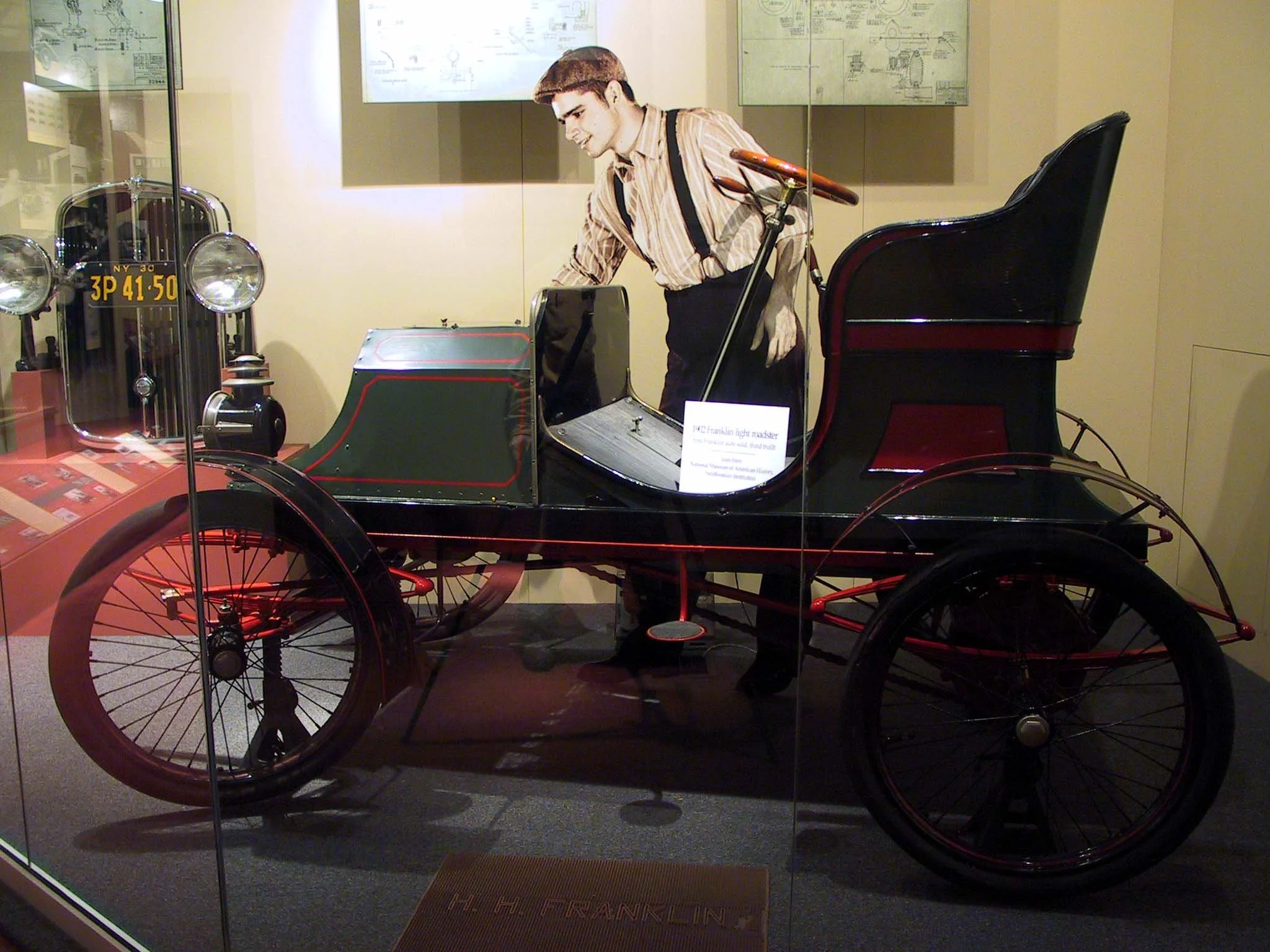
The Franklin automobile located at the Onondaga Historical Association, downtown Syracuse, NY. Photo source: OHA
The Lipe Machine Shop became known as “the cradle of Syracuse industry,” not for one invention but for the ecosystem it nurtured. Some of the leading engineers of the era worked there, shoulder to shoulder, solving the industrial challenges of their time with unmatched precision.
Lipe’s innovation wasn’t mechanical. It was human.
He proved that when someone opens a door to collaboration, innovation accelerates and progress compounds.
The Spirit Lives On at Think Variant
That same spirit drives us today at Think Variant. We don’t just make a part and ship it out the door; we collaborate with you.
We ask the hard questions to uncover the real problem because the first challenge is rarely the true one. We invite you into the process: the sketches, the prototypes, the possibilities.
We build machines that don’t exist yet because your project demands it. We test materials side by side so you can feel the difference. We work through setbacks, revisions, and breakthroughs together.
At Think Variant, your goals become our goals. Whether you’re producing fifty units or preparing to scale to five thousand, we design for where you are and where you’re going. That’s the difference between simply printing a part and building a future together.
We’re your partners through every iteration, every late-night idea, every milestone, moving one step closer to your vision with each design.
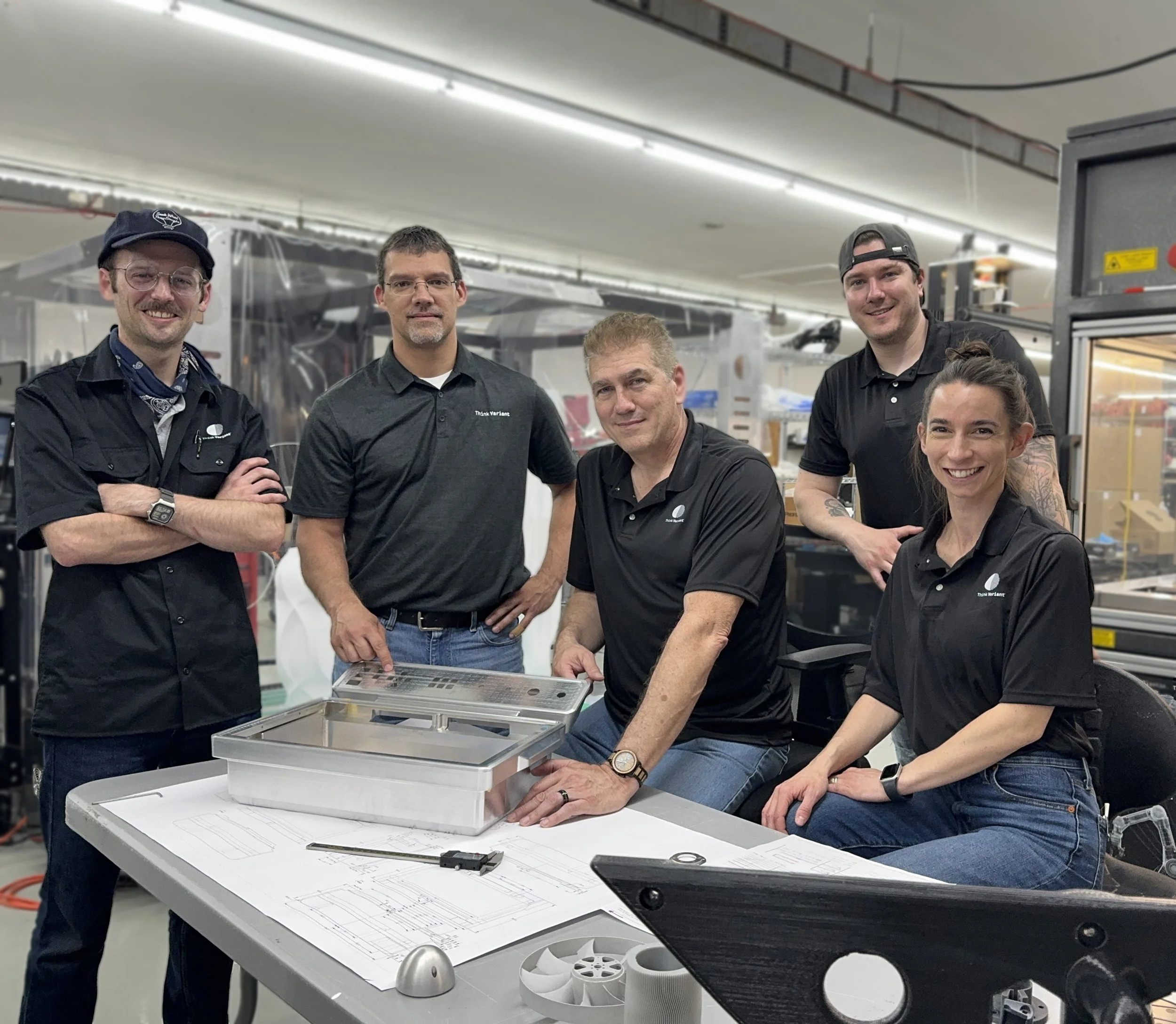
The leadership team at Think Variant: Isaac Budmen, Harold Watkins, Scott Antonacci, Matthew Antonacci, and Stephanie Budmen
From Salt City Market to Think Variant, Central New York continues to rise on collaboration.
Innovation has always had an address here.
Charles Lipe knew it in 1880. We’re living it in 2025.
Syracuse is rising again.
